Choksi Laboratories

admin_choksi

FDA Removes PABA & Trolamine Salicylate from Sunscreen Active Ingredients

FDA Issues Final Order Removing PABA and Trolamine Salicylate as Sunscreen Active Ingredients

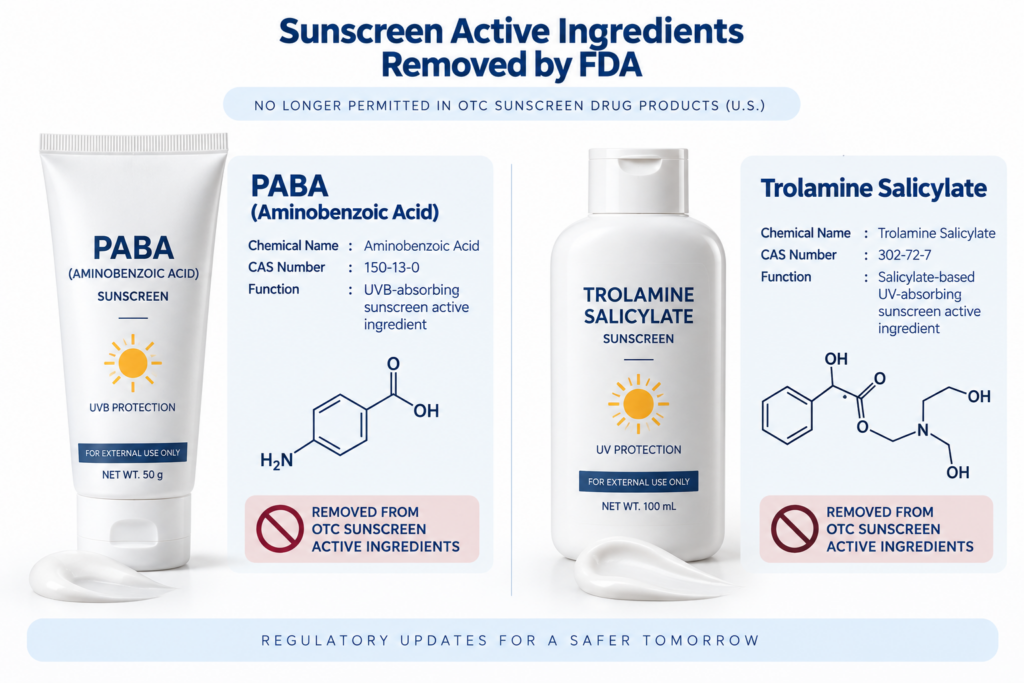
FDA Updates OTC Sunscreen Requirements The U.S. Food and Drug Administration (FDA) has issued a Final Administrative Order addressing the regulatory status of two sunscreen active ingredients — PABA (Aminobenzoic Acid) and Trolamine Salicylate. Under the final order, these two ingredients are removed from the active ingredients permitted for use in over-the-counter (OTC) sunscreen drug products under the U.S. sunscreen monograph. FDA determined that, based on the available information, the risks associated with these ingredients outweigh their benefits when used as active ingredients in sunscreen drug products. Once the final order becomes effective, sunscreen drug products containing PABA or Trolamine Salicylate cannot be marketed in the United States without FDA approval. Which Sunscreen Ingredients Have Been Removed? 1. PABA (Aminobenzoic Acid) 2. Trolamine Salicylate What Does the Final Order Mean for Sunscreen Manufacturers? The update highlights the importance of continuously monitoring regulatory developments affecting sunscreen formulations and OTC drug products. Manufacturers, formulators, marketers, and other stakeholders should review their products and regulatory strategies to ensure alignment with the updated requirements. Key considerations may include: For organizations developing new sunscreen products for the U.S. market, early regulatory assessment can help identify potential compliance issues before commercialization. What Does This Mean for Consumers? According to FDA, this regulatory action is not expected to affect sunscreen products currently available on U.S. store shelves because the agency is not aware of any sunscreens currently marketed in the United States that contain either PABA or Trolamine Salicylate. Therefore, consumers do not need to take any action as a result of this order. Consumers should continue using sunscreen as directed and follow other recommended sun-protection measures, such as seeking shade and using protective clothing when appropriate. Part of the Broader Modernization of Sunscreen Regulation The removal of these two ingredients is part of FDA’s broader work to modernize the regulatory framework governing OTC sunscreen drug products. This process is being carried out under the Coronavirus Aid, Relief, and Economic Security (CARES) Act of 2020, which introduced a new administrative order process for establishing and updating OTC drug monographs. FDA issued a proposed sunscreen order in September 2021, which received more than 15,000 public comments. The agency continues to evaluate other important aspects of sunscreen regulation, including matters related to: For sunscreen manufacturers and other stakeholders, this means the regulatory landscape may continue to evolve as additional FDA decisions are finalized. Why Regulatory Monitoring Matters Sunscreens occupy an important intersection between product safety, analytical science, formulation development, quality control, and regulatory compliance. Changes to the regulatory status of an active ingredient can have implications throughout a product’s lifecycle — from formulation and testing to labeling and market authorization. Regular monitoring of regulatory developments can therefore help manufacturers: How Choksi Laboratories Supports Manufacturers At Choksi Laboratories Limited, we support pharmaceutical, cosmetic, personal care, and related industries with advanced analytical capabilities and scientific expertise. Our services help manufacturers strengthen their approach to product testing, quality assurance, regulatory compliance, and product development as global requirements continue to evolve. By combining reliable analytical testing with technical and regulatory expertise, we help organizations make informed decisions and maintain confidence in the quality, safety, and compliance of their products. For businesses operating in regulated markets, having access to dependable testing and scientific support can be an important part of responding effectively to changing regulatory requirements. Stay Prepared for Evolving Sunscreen Regulations FDA’s decision regarding PABA and Trolamine Salicylate reinforces the need for manufacturers to remain informed about changes to the U.S. OTC sunscreen regulatory framework. As FDA continues its review of other sunscreen monograph provisions, companies should continue assessing their formulations, testing strategies, labeling, and regulatory requirements to ensure ongoing compliance. Need analytical testing or regulatory support for your pharmaceutical, cosmetic, or personal care products? Contact Choksi Laboratories Limited📧 bd@choksilab.in🌐 www.choksilab.in Accurate Testing | Trusted Quality | A Healthier Tomorrow
FDA Issues Final Order Removing PABA and Trolamine Salicylate as Sunscreen Active Ingredients Read More »

Paneer

How to Ensure Your Soya Paneer and Paneer Are Properly Lab Tested for Quality, Safety & Authenticity

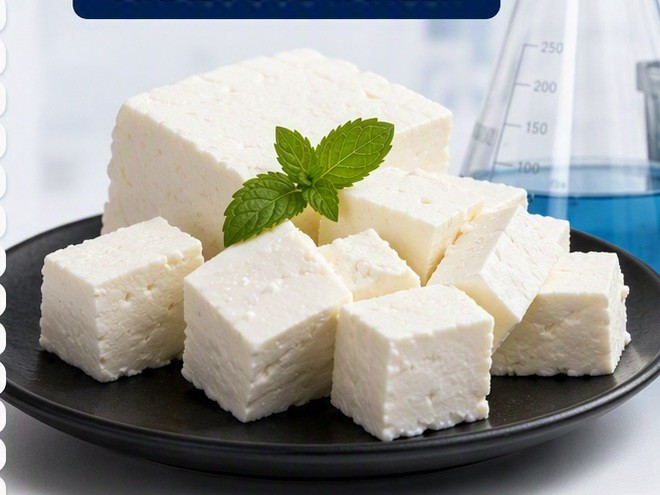
How to Ensure Your Soy Paneer & Paneer Are Lab Tested and Safe Paneer and soy paneer are widely consumed food products, but ensuring their quality, authenticity, nutritional accuracy and safety is essential. Laboratory testing helps assess these products for adulteration, microbiological contamination, nutritional composition and chemical contaminants. With growing concerns around fake paneer, adulteration and product quality, professional laboratory testing can help manufacturers, retailers, HoReCa businesses, exporters and consumers make informed decisions about product safety and compliance. What Does Paneer Testing Cover? A comprehensive paneer testing program can include: Microbiological Testing Paneer contains high moisture and protein, making it highly perishable. Microbiological testing can assess parameters such as E. coli, Salmonella, Listeria, yeast and mold, and total plate count to evaluate product safety. Adulteration & Fake Paneer Testing Testing can help identify common adulteration indicators such as starch, synthetic milk, urea, detergent residues, foreign fat and vegetable oil markers such as β-sitosterol. Nutritional Analysis Laboratory analysis can verify important nutritional parameters including protein, fat, moisture and carbohydrates, helping ensure that nutritional claims are supported by laboratory results. Chemical Contaminant Testing Depending on the testing requirement, laboratories can screen for heavy metals such as lead and arsenic, pesticide residues, preservative levels and antibiotic residues. Why Is Soy Paneer Testing Important? Soy paneer requires specific attention because it is a plant-based product with different quality and safety considerations compared with dairy paneer. A detailed soy paneer testing program may include: Since soy is a common allergen, appropriate testing and accurate declaration are important considerations for product labeling and consumer safety. Why Should Food Businesses Test Paneer? For manufacturers, retailers, HoReCa suppliers and exporters, regular laboratory testing can help reduce risks related to: Regulatory penalties • Product recalls • Brand damage • Legal liabilities • Customer complaints Testing also supports regulatory compliance, brand trust, export requirements and reduction of product-recall risks. Read the Complete Guide For detailed information on paneer and soy paneer testing, adulteration detection, food-safety parameters and laboratory testing considerations, download or view our complete guide below. Choksi Laboratories provides comprehensive analytical testing solutions to support food quality, safety, authenticity and regulatory compliance, helping businesses make informed decisions and maintain confidence in their products. Test. Verify. Trust. Reliable laboratory testing helps support food quality, product authenticity, consumer safety and regulatory compliance.

How to Ensure Your Soya Paneer and Paneer Are Properly Lab Tested for Quality, Safety & Authenticity Read More »

Choksi Laboratories Receives Enhanced CDSCO Approval for Medical Devices Quality Assessment

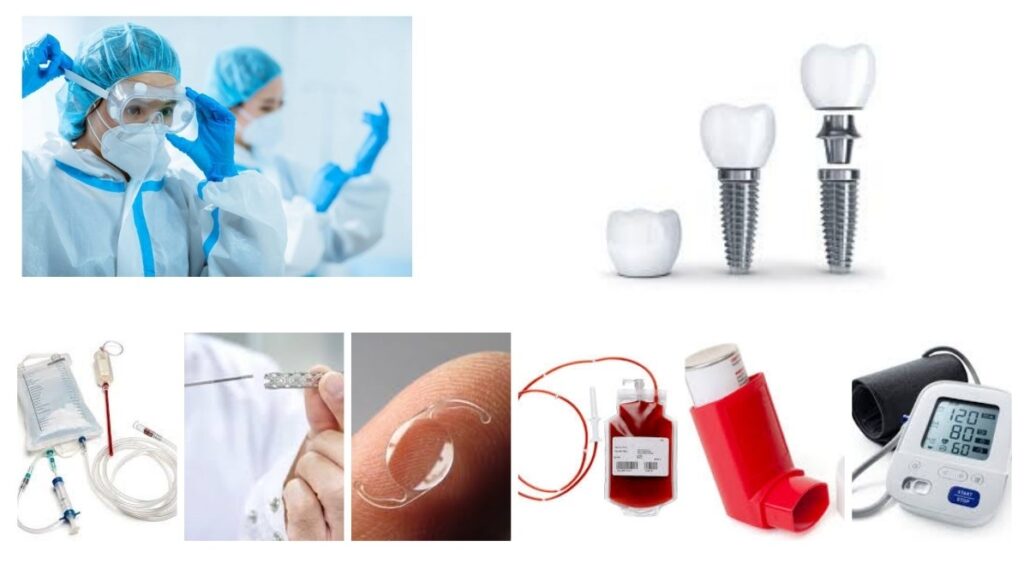
Choksi Laboratories Receives Enhanced CDSCO Approval for Medical Devices Quality Assessment We are thrilled to announce that Choksi Laboratories Limited (CLL) has received enhanced scope approval from the Central Drugs Standard Control Organization (CDSCO) for the testing and evaluation of medical devices. This expansion strengthens our commitment to ensuring high-quality and regulatory-compliant medical devices for the healthcare industry. Expanded Scope of Testing The approval now covers 59 medical devices across various classes, allowing CLL to conduct comprehensive chemical, microbiological, and elemental analysis. Some of the critical quality parameters included in our expanded scope are: Chemical Characterization – Identification of the chemical composition of medical devices. Extractables and Leachables Assessment – Evaluating potential chemical compounds that may migrate from the device to the patient. Sterilization Residues Testing – Detection of Ethylene Glycol (EG), Diethylene Glycol (DEG), Ethylene Oxide (EO), and Ethylene Chlorohydrin (ECH) to ensure product safety. Elemental Analysis – Determining the presence of extractable and total elements that could impact device performance and safety. CLL already had an approved scope for microbiological testing of medical devices. With this enhanced scope, we are now positioned to provide a comprehensive suite of quality assessment services for a broader range of medical devices.  Medical Devices Covered in the Expanded Scope Our state-of-the-art laboratory can now test and evaluate a diverse range of medical devices, including but not limited to: IV Bags and Sets Catheters Lenses & Contact Lenses Dental Implants and Orthopedic Implants Cardiovascular Devices and Stents Surgical & Non-Surgical Gloves Intrauterine Devices (IUDs) Nebulizers, Aspirators, and Inhalers Face Masks, Nasal Masks, and Oral Masks Commitment to Quality and Compliance At Choksi Laboratories, we uphold the highest standards of testing and regulatory compliance. Our advanced analytical capabilities, combined with our expertise in pharmaceutical and medical device testing, ensure that we deliver reliable, accurate, and regulatory-compliant results. With this CDSCO-approved enhanced scope, we reaffirm our commitment to supporting medical device manufacturers, importers, and healthcare providers in delivering safe and effective medical solutions to the market.🔬 For inquiries about our medical device testing services, contact us today!  

Choksi Laboratories Receives Enhanced CDSCO Approval for Medical Devices Quality Assessment Read More »

Nitrate, Nitrite and NDMA in Lactose

Nitrate, Nitrite, and NDMA Contaminants in Lactose: Analytical Insights and Regulatory Perspectives

Nitrate, Nitrite and NDMA in Lactose Risk Assessment and Analytical Perspective What is Lactose? Lactose is a sugar (disaccharide) naturally present in milk. About 2-8% of milk content by weight is Lactose. Lactose contains one molecule of glucose and one molecule of galactose. Lactase, an enzyme in human gut, breaks down the Lactose in its constituents. Lactose Applications in Food and Pharmaceuticals Lactose is used mainly in infant milk powders, food additives and in pharmaceutical formulations as an excipient. Its physico-chemical properties such as compressibility and palatability make it an ideal excipient for pharmaceutical preparations. Several OTC drugs such as painkillers, anti-inflammatory drugs, antacids, birth-control pills, dry powder inhalation products etc. use Lactose as a diluent, excipient or carrier. How is Lactose manufactured? Commercially available lactose is manufactured by evaporation, crystallization, and refining from whey permeate separated after production of cheese & other milk products. Nitrate, Nitrites and Nitrosamines in Lactose Relationship of Nitrate, Nitrites and Nitrosamines Nitrate and Nitrite are naturally present in milk from various sources such as ingestion of nitrates and nitrites by dairy cows during grazing and drinking, nitric acid used during the sanitization of dairy equipment, etc. A 2008 study4 carried out on several market drugs, provided following Lactose contents: Group name Generic name Lactose per tablet (mg) Maximum no. tablets per day Theoretical total lactose ingested per day (mg) Antimuscarinics Dicycloverine hydrochloride 74 6 444 Propantheline bromide 38 8 304 Other antispasmodics Mebeverine hydrochoride 95 3 285 99 3 297 Anti-motility drugs Codeine phosphate 46 8 368 Loperamide hydrochloride 125 8 1000 108 8 864 Aminosalicylates Mesalazine 75 6 450 Corticosteroids Budesonide 600 3 1800 Prednisolone 31 12 372 Immunosuppressants Azathioprine 71 3.5 248.5 Mercaptopurine 61 2 122 Methotrexate 28.9 6 173.4 Nitrate and/or Nitrite react through various biological or chemical processes convert to NDMA3,4. Some of the processes in production of milk powder / lactose such as equipment disinfection, acidification, and heating in directly heated spray dryers, may cause production of NDMA in final product. One of the possible routes of NDMA formation from Nitrite ion NDMA is a known carcinogen and an analyte of concern. The ADI (Acceptable Daily Intake) established by US-FDA for NDMA is 96ng/day. Roughly, this translates to following limits in lactose assuming a 100mg/tablet lactose contribution: Excipient Theoretical Intake (Dose) per day QC Specification Limit – NDMA Lactose(100mg/tablet) One tablet daily dose 0.96ppm Two tablets daily dose 0.16ppm Four tablets daily dose 0.08ppm Given this, lactose has a major potential to contribute Nitrate, Nitrite or NDMA itself to the drug product. Nitrite, Nitrate Acceptable Daily Intake A study1 published by US-FDA researchers in Journal of Agricultural and Food Chemistry, in January 2020, reviewed Nitrate, Nitrites in animal as well as plant based milk and milk products. The study found that out of 71 commercial milk powder samples, 67 had Nitrate content > 1.5mg/kg (1.9mg/kg being the lowest and 395mg/kg being the highest). In addition, a smaller subset of these samples were also tested for NDMA content and found NDMA content in all tested samples Acceptable Daily Intakes for Nitrate and Nitrite as per WHO Nitrate ADI Nitrite ADI ADI (mg/Kg of body-weight) 3.7 0.07 Limits for an Adult, mg/Day (60kg body weight) 222 4.2 Analytical Method by Choksi Laboratories Ltd. Lactose is a challenging matrix as the sugar can lead to rapid column degradation. Therefore, it is extremely important to ensure that the column loading is managed to ensure that nitrate and nitrite are separate well while reducing matrix interference to minimum. We used a Dionex 5000plus Ion Chromatogram equipped with ASRS 300. IonPac®AS14A Analytical 4 × 250 mm column was used with analytical guard column of same packing. Nitrate, Nitrites and Nitrosamines in Lactose Standards and samples were matrix matched by using standard addition method, to further reduce interference. System Suitability: As can be seen in the chromatogram, both Nitrate and Nitrite were well resolved. There was no matrix interference. And a linear regression determined the coefficient of determination to be 0.9996 (well over the acceptance limit of 0.995). Results: Lactose samples typically showed nitrate concentrations at about 1.9ppm to 10ppm. Nitrite was not detected in any sample tested in the study. Further NDMA studies were carried out in GC-HS-MS/MS equipped with HES source, and utilized back-flushing technique to remove other contaminants from column. LOD/LOQ: Typical LOD, LOQ values established are given below: Nitrate, ppm Nitrite, ppm NDMA, ppm LOD* 0.005 0.005 0.001 LOQ* 0.01 0.01 0.003 (*): On instrument With this study at CLL-Indore, a rapid methodology was established to analyze Nitrate and Nitrite in Lactose samples, followed by NDMA estimation by GC-HS- MS/MS, meeting current regulatory requirements quite easily. Reference Documents: J. Agric. Food Chem. 2020, 68, 6, 1725– 1730, Publication Date: January 22, 2020 : Investigation into the Concentrations and Sources of Nitrates and Nitrites in Milk and Plant-based Powders, Susan Genualdi, Mayara P. V. Matos, John B. Mangrum, Lowri DeJager WHO/HSE/AMR/08.03/8: N- Nitrosodimethylamine in Drinking-water, Background document for development of WHO Guidelines for Drinking-water Quality, 2008 EPA Technical Fact Sheet – N-Nitroso- dimethylamine (NDMA), January 2014 Quantifying the ‘hidden’ lactose in drugs used for the treatment of gastrointestinal conditions, P. EADALA,J. P. WAUD,S. B. MATTHEWS,J. T. GREEN,A. K. CAMPBEL.

Nitrate, Nitrite, and NDMA Contaminants in Lactose: Analytical Insights and Regulatory Perspectives Read More »

FDA Expands Cinnamon Recall for Lead Contamination

FDA Expands Ground Cinnamon Recall Due to Lead Contamination: Comprehensive Public Health Alert and Consumer Safety Recommendations

The U.S. Food and Drug Administration (FDA) has expanded its public health alert to include more ground cinnamon products due to the presence of elevated levels of lead. This action follows rigorous product testing conducted by state programs and confirmed by the FDA. Consumers are strongly advised to dispose of and refrain from purchasing these products. Key Points of the Alert: Elevated Lead Levels Detected: Recent testing has revealed that certain ground cinnamon products contain elevated levels of lead. These products pose a significant health risk, particularly with prolonged exposure, and should be discarded immediately. Voluntary Recalls: The FDA has recommended that companies voluntarily recall these products. The list of affected products continues to grow as more brands are identified. The FDA will update this alert with information from companies that agree to recall their products. Ongoing Investigation: The FDA, in collaboration with state partners, is continuing to analyze ground cinnamon samples. This public health alert will be updated as more data becomes available. As of now, no illnesses or adverse events related to these products have been reported. Background: This is the third public health alert issued by the FDA this year concerning ground cinnamon, reflecting the agency’s commitment to ensuring the safety of food products, especially those frequently consumed by children. The alert recommends recalls of nine brands of ground cinnamon, with lead levels ranging from 2.03 to 7.01 parts per million (ppm). These levels, while lower than those found in the WanaBana cinnamon apple puree and applesauce products recalled in 2023, still present a significant health risk. The FDA’s targeted assessment and subsequent alerts have been supported by data collected through the Laboratory Flexible Funding Model (LFFM), a cooperative agreement with state partners. States including California, Maryland, Missouri, Connecticut, and Virginia, along with the New York State Department of Agriculture and Markets, have contributed to the sampling efforts. Recommendations for Consumers: Check and Dispose: Consumers should immediately check their homes for ground cinnamon products and dispose of any items listed in the alert. These products have a long shelf life, so it’s important to verify any ground cinnamon you may have stored. Do Not Use or Purchase: Avoid using or purchasing ground cinnamon products identified in the alert. The FDA advises against consuming, selling, or serving these products due to the health risks associated with lead exposure. Seek Medical Advice: If there is any suspicion of lead exposure, particularly for vulnerable groups such as children and pregnant women, contact your healthcare provider for guidance. Although many people may not exhibit immediate symptoms of lead exposure, prolonged ingestion can lead to serious health complications. Report Adverse Events: If you or someone you know experiences adverse effects or illness after using these products, report it to the FDA’s MedWatch Safety Information and Adverse Event Reporting Program. You can submit reports online, by fax, or by mail. For more detailed information about this alert and the list of affected products, please visit the FDA’s official MedWatch page.

FDA Expands Ground Cinnamon Recall Due to Lead Contamination: Comprehensive Public Health Alert and Consumer Safety Recommendations Read More »

Scroll to Top