
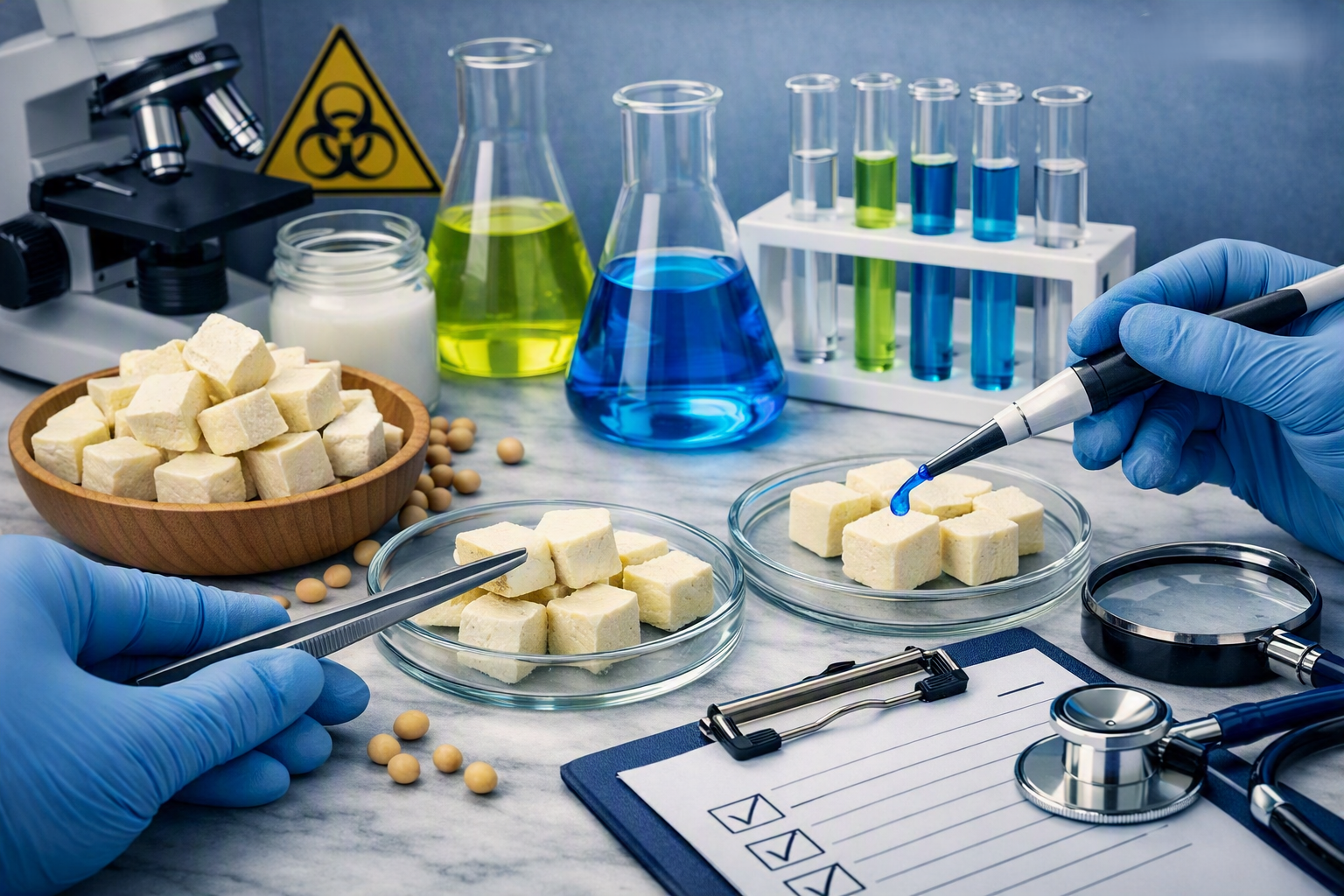
How to Ensure Your Soy Paneer & Paneer Are Lab Tested and Safe
Paneer and soy paneer are widely consumed food products, but ensuring their quality, authenticity, nutritional accuracy and safety is essential. Laboratory testing helps assess these products for adulteration, microbiological contamination, nutritional composition and chemical contaminants.
With growing concerns around fake paneer, adulteration and product quality, professional laboratory testing can help manufacturers, retailers, HoReCa businesses, exporters and consumers make informed decisions about product safety and compliance.
What Does Paneer Testing Cover?
A comprehensive paneer testing program can include:
- Microbiological testing
- Adulteration and foreign-fat detection
- Nutritional analysis
- Chemical contaminant testing
- Protein and ingredient identification
- Quality and compliance assessment
Microbiological Testing
Paneer contains high moisture and protein, making it highly perishable. Microbiological testing can assess parameters such as E. coli, Salmonella, Listeria, yeast and mold, and total plate count to evaluate product safety.
Adulteration & Fake Paneer Testing
Testing can help identify common adulteration indicators such as starch, synthetic milk, urea, detergent residues, foreign fat and vegetable oil markers such as β-sitosterol.
Nutritional Analysis
Laboratory analysis can verify important nutritional parameters including protein, fat, moisture and carbohydrates, helping ensure that nutritional claims are supported by laboratory results.
Chemical Contaminant Testing
Depending on the testing requirement, laboratories can screen for heavy metals such as lead and arsenic, pesticide residues, preservative levels and antibiotic residues.
Why Is Soy Paneer Testing Important?
Soy paneer requires specific attention because it is a plant-based product with different quality and safety considerations compared with dairy paneer.
A detailed soy paneer testing program may include:
- Soy protein quality analysis
- Allergen declaration verification
- Heavy metal testing
- Microbiological safety analysis
- Shelf-life testing
Since soy is a common allergen, appropriate testing and accurate declaration are important considerations for product labeling and consumer safety.
Why Should Food Businesses Test Paneer?
For manufacturers, retailers, HoReCa suppliers and exporters, regular laboratory testing can help reduce risks related to:
Regulatory penalties • Product recalls • Brand damage • Legal liabilities • Customer complaints
Testing also supports regulatory compliance, brand trust, export requirements and reduction of product-recall risks.
Read the Complete Guide
For detailed information on paneer and soy paneer testing, adulteration detection, food-safety parameters and laboratory testing considerations, download or view our complete guide below.
Choksi Laboratories provides comprehensive analytical testing solutions to support food quality, safety, authenticity and regulatory compliance, helping businesses make informed decisions and maintain confidence in their products.
Test. Verify. Trust.
Reliable laboratory testing helps support food quality, product authenticity, consumer safety and regulatory compliance.